






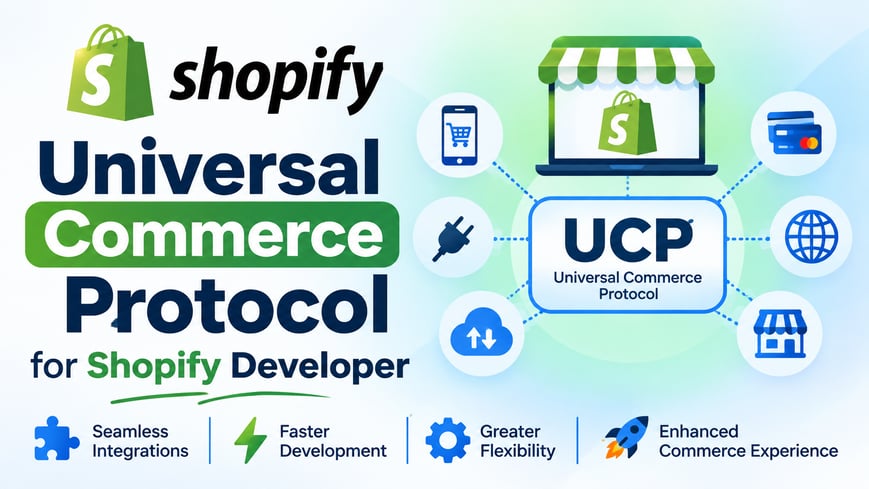
AI assistants are turning into storefronts. Shoppers tell what they want, do a price check and purchase without opening a browser window. Developers are the ones who felt the change and have come to know the universal commerce protocol Shopify, developed by Google. In this guide, you'll learn what it is, how it works and what you should do about it.
What Is UCP?
So, what is UCP? The Universal Commerce Protocol is an open standard, co-developed by Shopify and Google, that defines how AI agents transact with merchants, covering cart creation, checkout, payment and post-purchase. It was announced during the NRF conference in January 2026. Backers include Amazon, American Express, Etsy, Mastercard, Meta, Microsoft, Salesforce, Stripe, Target, Walmart and Visa.
It's a very basic setup. A merchant publishes a profile at /.well-known/UCP which contains the version of UCP the merchant supports, the capabilities the merchant supports (e.g., checkout, fulfillment and discount) and the payment handlers the merchant supports (e.g., Google Pay, Shop Pay). The agent publishes its profile and the protocol takes care of the differences, without the need for any meetings of the agents. That's also true for transport: REST, GraphQL, JSON-RPC, A2A or MCP - no changes in the business logic.
Why the Universal Commerce Protocol Shopify Model Matters
Prior to UCP, each new assistant would result in a new integration. According to Shopify, once a new AI platform implements UCP, their merchants are immediately able to sell on that platform; and checkout rules, discounts and terms are consistent regardless of which agent is initiating the purchase.
That's the actual worth of the Universal Commerce Protocol Shopify approach. You have only one commerce, rather than one for each assistant. So if you're still wondering what is UCP, then consider it to be a common language between merchants, agents and payment providers.
Key Capabilities at a Glance
- Discovery: both merchants and agents post a profile to ensure that both parties are aware of what they want to buy/sell.
- Checkout: Carts, totals, shipping and payment go through a normal flow.
- Orders and post-purchase: In both cases, normal tracking and support.
- Open payments: they aren't set out as a rule, but they're included in Shop Pay.
- Extensions: custom capabilites include discounts, fulfillment rules and integrated checkout.
- Versioning: profiles specify a protocol version and the standard can be changed in a safe manner.
For merchants planning to connect their stores with AI-powered shopping experiences, the technical setup also deserves attention. Working with a Shopify app development company can help businesses build custom integrations, manage store functionality and prepare their commerce systems for emerging agentic shopping requirements.
Agentic Commerce Protocol vs UCP: How They Differ
There are other standards in this range of standards. Instant Checkout in ChatGPT is powered by OpenAI ACP, which was created using Stripe. Both protocols solve the same problem, but do it in different ways.
|
Feature |
UCP |
ACP |
|
Backed by |
Google and Shopify, plus a wide partner list |
OpenAI and Stripe |
|
Discovery |
Merchant-hosted profile at a well-known URI |
Product data submitted to the platform through feeds or APIs |
|
Architecture |
Decentralized and negotiated |
Platform-mediated |
|
Best known surfaces |
Google AI Mode, Gemini, Microsoft Copilot |
ChatGPT |
|
Developer takeaway |
Keep your store profile and checkout rules consistent |
Keep your product feed accurate and complete |
The details of both protocols are described differently in various sources, and they are still evolving, so be sure to validate each spec prior to implementing it. The use of the facts is simpler. Shopify's integration encompasses both ACP (Agentic Commerce Suite) and UCP, so you seldom have to choose.
Shopify Catalog for AI Agents
Agents don’t browse a store the way people do. Shopify Catalog organizes and distributes product titles, descriptions, photos, pricing, stock and shipping in real time to related AI platforms. A merchant is listed once and it is made available to all present and future AI partners. This is where your everyday work is most significant, making Shopify Catalog for AI agents the place to be for your daily tasks.
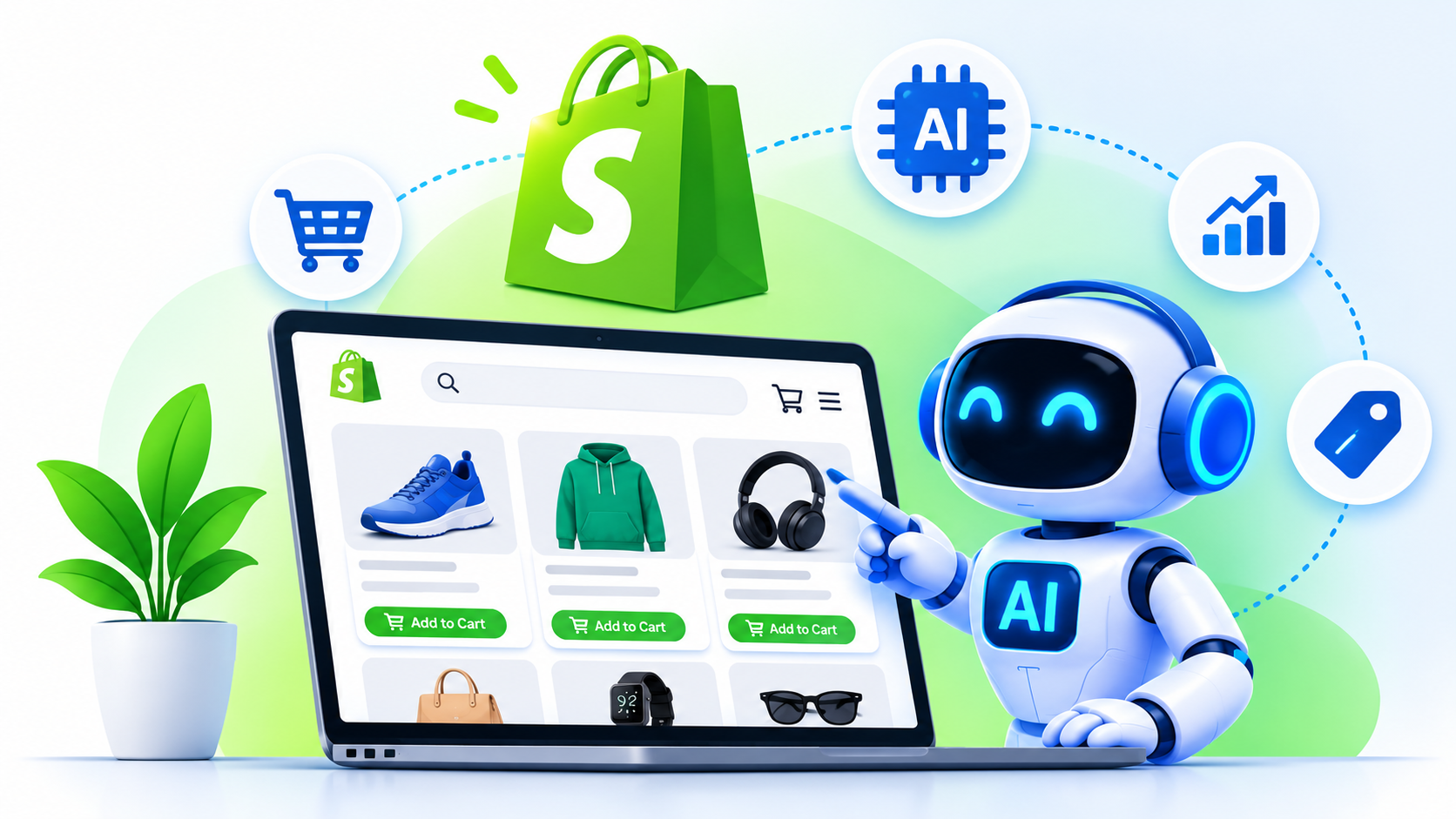
While product data plays an important role in AI-powered commerce, the customer-facing store experience still matters. Businesses investing in custom Shopify theme development should ensure their themes provide a smooth shopping experience, load efficiently and display product information clearly across devices.
Whether or not a product emerges in a conversation or passes over depends on the quality and completeness of that data. Consider structured product data as the new SEO. That's tidy titles, all the variants, right inventory, right metadata. Your own front end is still powered by your Storefront API work for headless builds, and UCP powers up the agent side. shopify
Where Shopify UCP Works Today
Shopify UCP support is already available on a few surfaces, but will be limited and will change over time:
- Google AI Mode and Gemini: available to select brands selling to customers in the US, and rolling out more widely.
- Microsoft Copilot: eligible merchants can leverage Copilot Checkout, powered by UCP, to sell directly through Copilot.
- ChatGPT: live for merchants who sell to their US customers, and the transaction takes place in the merchant's web shop, within an in-app browser.
- Meta: Shopify will be responsible for Checkout on a number of the experiences at Meta.
These channels are managed by merchants in the Agentic Storefronts section in the Shopify admin, so check the availability of these channels there.
Conclusion
The universal commerce protocol Shopify story is all about reach without rebuilding. See agentic commerce protocol vs UCP as something more of a question of coverage than a contest. Beginning with the payoff that is most evident: Shopify Catalog for AI agents. Optimize your product data, test your checkout tweaks and monitor agentic commerce as it grows.